
Tesla Model X 2022 Flood Damage: HV Battery Isolation Fault Explained
Tesla Model X 2022 Flood Damage: HV Battery Isolation Fault Explained
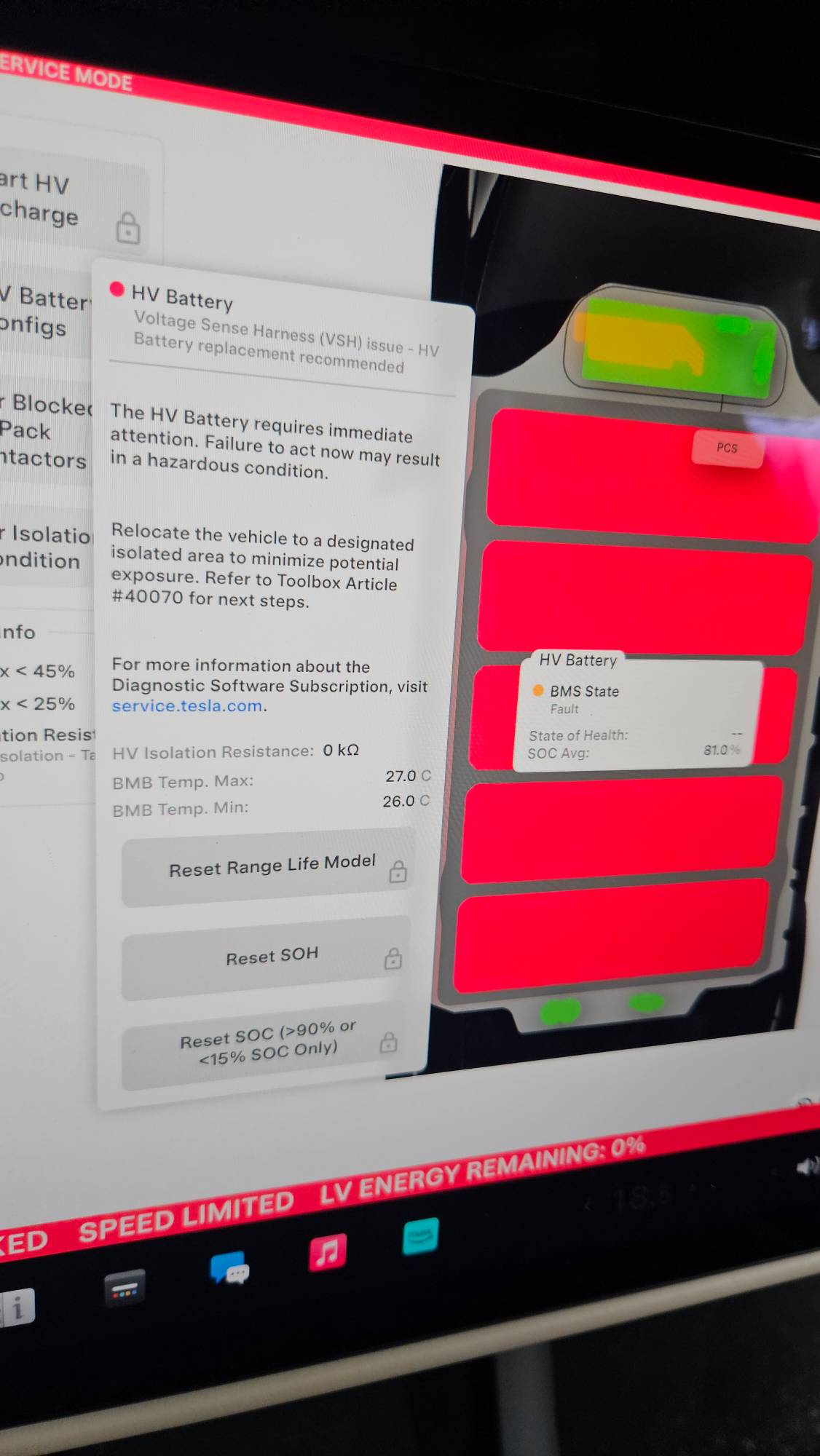
Upon further diagnosis using Tesla Service Mode, we discovered that the flood exposure had caused a high-voltage (HV) battery isolation fault, one of the most serious conditions that can occur in an electric vehicle.
What We Found During Diagnosis
The Tesla Service Mode revealed several critical warnings.
1. HV Battery Low Internal Isolation
The vehicle displayed:
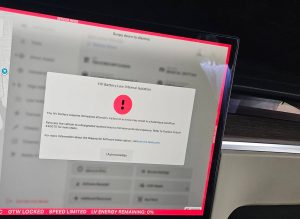
HV Battery Low Internal Isolation
This warning means the battery management system has detected that the electrical insulation between the high-voltage system and the vehicle chassis has dropped below Tesla’s safety threshold.
In simpler terms:
The high-voltage battery is no longer properly isolated, creating a potentially dangerous electrical condition.
2. HV Isolation Resistance = 0 kΩ
One of the most alarming findings was:
HV Isolation Resistance: 0 kΩ
A healthy Tesla should have insulation resistance measured in hundreds of kilo-ohms or even mega-ohms.
A reading of 0 kΩ indicates an extremely severe insulation fault.
Possible causes include:
- Water intrusion inside the battery pack
- Coolant contamination
- Damaged internal battery components
- Moisture inside high-voltage connectors
- High-voltage cable damage
This is why Tesla immediately limits vehicle operation.
3. Voltage Sense Harness (VSH) Issue
Tesla Service Mode also reported:
Voltage Sense Harness (VSH) Issue – HV Battery Replacement Recommended
The Voltage Sense Harness monitors every battery module.
If water reaches the harness or connector, the Battery Management System may no longer trust voltage readings, resulting in:
- Battery shutdown
- High-voltage contactors remaining open
- Charging disabled
- Driving disabled
4. BMS State Fault
The Battery Management System also reported a fault.
The BMS is responsible for:
- Monitoring battery voltage
- Temperature monitoring
- Isolation monitoring
- Charging control
- Vehicle safety
When isolation becomes unsafe, Tesla intentionally disables parts of the vehicle to protect occupants.
5. Automatic Emergency Braking Unavailable
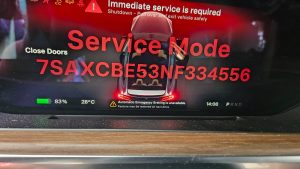
The dashboard also displayed:
Automatic Emergency Braking is unavailable
This is common during severe electrical faults because Tesla disables several driver-assistance systems when communication between safety modules becomes unreliable.
Why the Problem Appeared 30 Minutes Later
Many owners assume that if the vehicle continues driving after crossing water, everything is fine.
Unfortunately, that’s not always true.
After flood exposure:
- Water can slowly migrate into electrical connectors.
- Moisture begins reducing insulation resistance.
- The Battery Management System continuously performs isolation tests.
- Once the resistance drops below Tesla’s safety limit, the vehicle enters a protective shutdown.
This delayed response explains why the warning appeared after the flood crossing rather than immediately.
Can Driving Through Water Damage a Tesla Battery?
Yes.
Although Tesla vehicles are engineered with sealed battery packs and are capable of handling wet road conditions, driving through deep or fast-moving flood water exceeds their intended operating conditions.
Flood water may:
- Enter high-voltage connectors
- Damage battery seals
- Contaminate electrical components
- Corrode wiring
- Trigger insulation failures
- Lead to expensive battery repairs
Salt water is even more damaging because it accelerates corrosion and increases electrical conductivity.
Recommended Diagnostic Procedure
For a Tesla Model X showing these symptoms, our recommended workflow includes:
Initial Safety Inspection
- Verify HV isolation status.
- Check battery contactor state.
- Inspect high-voltage connectors.
- Confirm no thermal event has occurred.
Electrical Testing
- Measure insulation resistance using approved high-voltage insulation testing equipment.
- Inspect HV junction box.
- Inspect battery vent system.
- Check pyro fuse status.
- Verify interlock (HVIL) integrity.
Battery Inspection
If isolation remains low:
- Remove the HV battery.
- Inspect for water ingress.
- Check internal busbars.
- Inspect Voltage Sense Harness.
- Inspect battery modules.
- Look for coolant contamination.
- Check battery enclosure seals.
Can the Battery Be Repaired?
It depends on the extent of the damage.
Possible outcomes include:
Minor Water Exposure
- Dry affected connectors.
- Replace damaged seals.
- Clean corrosion.
- Perform insulation testing.
Connector Damage
- Replace affected HV connectors.
- Replace harnesses.
- Re-test isolation.
Internal Battery Damage
- Replace Voltage Sense Harness.
- Replace damaged battery modules (where supported).
- Repair battery enclosure.
Severe Water Intrusion
- Replace the complete HV battery pack.
Tesla Service Mode in this case recommended HV battery replacement, but a complete physical inspection is required before confirming that the entire pack is beyond repair.
Preventing Flood Damage to an EV
To reduce the risk of serious electrical damage:
- Avoid driving through flooded roads whenever possible.
- Never enter water if its depth is unknown.
- Do not park an EV in standing flood water.
- If flood exposure occurs, have the vehicle inspected before continuing regular use.
- Watch for delayed warning messages over the next several hours or days.
Final Thoughts
This case demonstrates that the most serious damage from flood water may not appear immediately. While the Tesla Model X initially continued to operate, its continuous safety monitoring later detected a critical insulation failure, prompting an emergency shutdown to protect the occupants.
When a Tesla reports “HV Battery Low Internal Isolation”, “Immediate Service Required”, or recommends battery replacement, these warnings should never be ignored. Prompt diagnosis by qualified EV technicians with the proper equipment is essential to determine whether the issue can be repaired or if major battery components need replacement.
At Carmedis, we specialize in advanced EV diagnostics and repairs, including Tesla high-voltage systems. Our technicians use professional diagnostic equipment and follow high-voltage safety procedures to accurately identify flood-related electrical faults and recommend the most appropriate repair solution.