
Why Some Imported EVs Arrive in Nigeria Unable to Charge
Why Some Imported EVs Arrive in Nigeria Unable to Charge
There is a growing number of cases where an electric vehicle is purchased overseas, shipped to Nigeria, and then arrives with a serious problem:
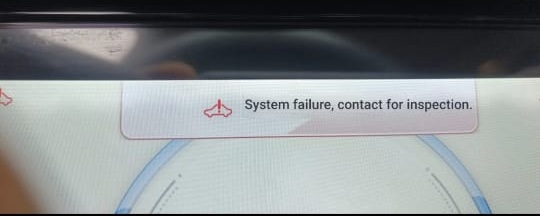
The vehicle will not start. It will not accept a charge. The dashboard may show a system failure — and diagnostic equipment may even report the battery SOH (State of Health) as 0%.
For the buyer, this can be extremely alarming. A vehicle that appeared perfectly fine before purchase can suddenly become a major financial problem after arrival.
What happens during transportation?
Unlike a conventional petrol vehicle, an EV cannot simply be parked for weeks or months without considering its battery-management requirements.
During sea transportation and prolonged storage, the vehicle’s 12V electrical system continues to support various control modules and systems. The high-voltage battery also has its own battery-management electronics and monitoring requirements.
If the vehicle is shipped with an insufficient state of charge, stored for a prolonged period, or handled incorrectly during transportation, the battery can reach a critically low condition.
When this happens, the Battery Management System (BMS) may place the high-voltage battery into a protection state.
The result can be:
- Vehicle refuses to enter READY mode
- Vehicle will not shift into Drive or Reverse
- Charging is rejected
- “System Failure” warnings appear
- Multiple communication faults may be recorded
- Diagnostic equipment may report abnormal battery parameters
- SOH may appear as 0% or an invalid value
But does SOH = 0% mean the battery is completely dead?
Not necessarily.
This is one of the most important points for EV owners and importers to understand.
A diagnostic scanner displaying 0% SOH does not automatically mean that every battery cell in the high-voltage pack has failed.
The BMS may be unable to correctly calculate or report battery health because of:
- Extremely low battery voltage
- BMS protection mode
- Loss of communication with battery modules
- 12V power-supply problems
- High-voltage interlock (HVIL) faults
- Internal BMS faults
- Cell imbalance
- Battery-management data corruption or initialization issues
- Prolonged storage in a severely discharged condition
Therefore, the number on the scanner is a diagnostic clue — not a verdict to replace the entire battery pack.
The lesson for EV importers
The cheapest vehicle on an overseas auction platform is not necessarily the cheapest vehicle to own.
Before purchasing an EV for importation into Nigeria, you should establish:
1. Battery SOC
What is the actual state of charge before shipment?
2. Battery SOH
What is the battery’s actual health condition, and can the reported value be verified?
3. BMS status
Are there existing BMS or high-voltage battery faults?
4. 12V battery condition
Is the auxiliary battery healthy enough to survive transportation and storage?
5. Charging operation
Has the vehicle actually been tested on a compatible charger before shipment?
6. Shipping preparation
Has the vehicle been prepared correctly for prolonged transportation and storage?
7. Diagnostic scan
Are there existing faults that could become more serious during transportation?
The biggest mistake is buying first and asking questions later
Dealers buy vehicles to sell.
The responsibility of the buyer is to understand what they are buying, the condition it is in, and what is required to bring it into operation in Nigeria.
A vehicle can leave the seller’s location appearing normal and arrive weeks later with a completely different problem.
That is why an EV pre-purchase inspection is not an unnecessary expense. It is risk management.
Before you pay for that imported EV, don’t only ask:
“How much is the car?”
Ask:
“What is the condition of the battery, what faults are stored, how was it prepared for shipping, and what happens if it arrives unable to charge?”
Because when an EV arrives in Nigeria showing 0% SOH and refusing to charge, the solution may not necessarily be “replace the battery.”
Contact a Carmedis EV Specialist to diagnose first. Understand the BMS. Test the 12V system. Verify the HV system. Then decide what needs to be repaired.
Buy informed. Ship prepared. Diagnose before you replace.